Livingstone and Victoria Falls have three seasons: hot and wet from about November to March, cool and dry from May to August, and hot and dry in September and October. Daytime temperatures stay between about 26°C and 34°C all year. What changes most is the night-time low, the rain, and how much spray the falls throw at you.
This page covers the weather and what to bring. For water levels at the falls, Devil's Pool dates and which activities run when, see the best time to visit Victoria Falls.
Weather table
Averages for Livingstone. Victoria Falls town in Zimbabwe, about 10 km away across the river, has the same climate.
| Month | Average high | Average low | Rainfall | Rain days | What it feels like |
|---|---|---|---|---|---|
| January | 31°C | 20°C | 170 mm | 15 | Warm, humid, afternoon storms |
| February | 30°C | 19°C | 140 mm | 13 | Humid, storms easing late in month |
| March | 31°C | 18°C | 75 mm | 8 | Rain tailing off, still green |
| April | 30°C | 16°C | 20 mm | 3 | Mostly dry, pleasant |
| May | 28°C | 11°C | 3 mm | 0 | Dry, cool evenings |
| June | 26°C | 8°C | 0 mm | 0 | Clear, cold nights |
| July | 26°C | 7°C | 0 mm | 0 | Coldest month, crisp mornings |
| August | 29°C | 10°C | 0 mm | 0 | Warming, windy, dusty |
| September | 33°C | 15°C | 1 mm | 0 | Hot, dry, hazy |
| October | 34°C | 19°C | 20 mm | 3 | Hottest month, building heat |
| November | 33°C | 20°C | 65 mm | 10 | First storms, humid |
| December | 31°C | 20°C | 165 mm | 15 | Wet, green, warm nights |
Figures are long-term averages rounded from published climate data. Individual years vary, and highs of 38–40°C are not unusual in October.
Season by season
Hot and wet: November to March
Rain usually comes as a storm in the afternoon or evening, sometimes heavy, then clears. Whole days of drizzle are rare. Mornings are often bright, which is when to schedule anything outdoors. Humidity is high from December to February, and dirt roads into the bush can turn to mud.
Mosquitoes are most active in this period. See health and malaria at Victoria Falls.
Cool and dry: April to August
Clear skies, almost no rain, and comfortable days. The surprise for many visitors is how cold the early mornings and evenings are in June and July. On a sunrise boat trip or an open game vehicle at 6am, 7°C with wind feels close to freezing. Lodges usually give out blankets, but a proper warm layer is worth packing.
Hot and dry: September and October
The bush is bare and brown, the air is dusty and often hazy from seasonal fires, and the afternoons are hot. Plan walks and the rainforest trail at the falls for early morning. Drink more water than you think you need.
What to pack
All year
- Sun hat, sunglasses and high-factor sunscreen. The sun is strong at about 18° south, even in winter.
- Insect repellent containing DEET or picaridin, and long, light trousers and long sleeves for the evenings.
- Comfortable walking shoes with grip. The paths at the falls are wet and slippery in high-water months.
- Neutral-coloured clothes (khaki, olive, beige) if you are going on safari. Avoid dark blue and black, which attract tsetse flies in some areas.
- A small dry bag or waterproof phone pouch.
- A reusable water bottle.
For the falls themselves
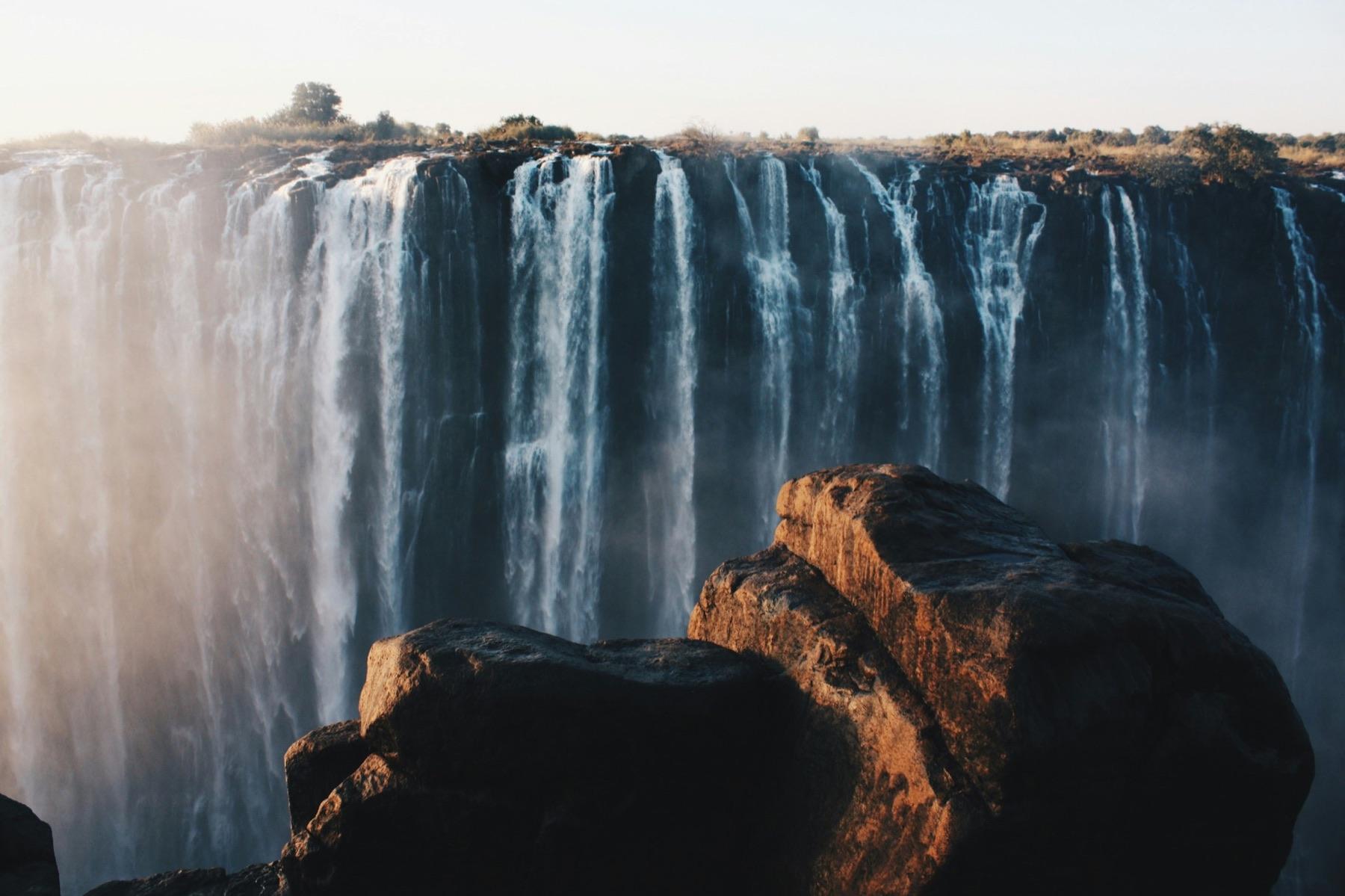
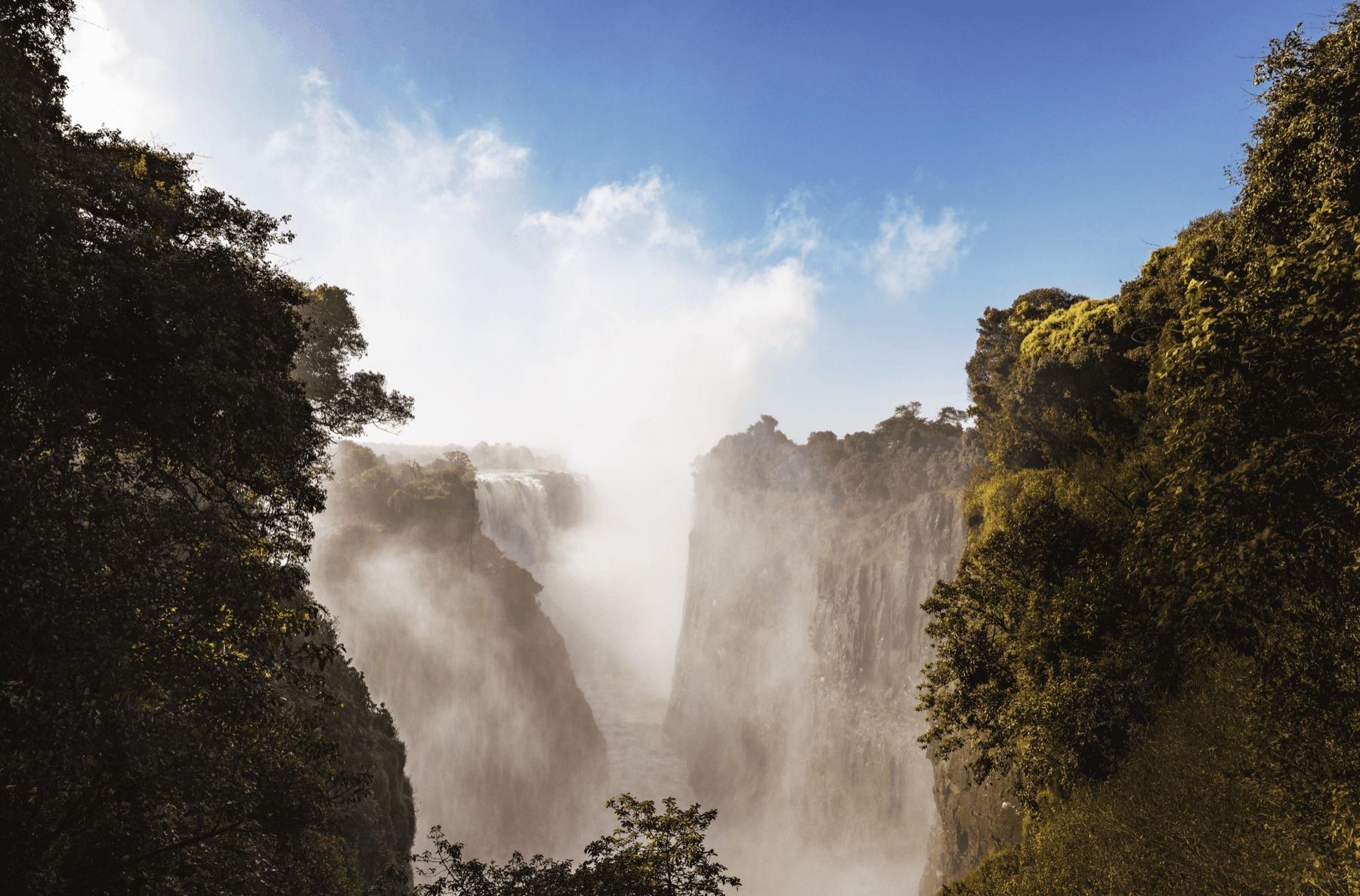
From about February to July, the spray on the Zambian side ranges from a fine mist to something like standing under a shower. Raincoats can be rented at the entrance, but a light poncho of your own is cheaper and drier. Wear quick-drying clothes and sandals or shoes that you don't mind getting soaked. Leave cameras that aren't weather-sealed in a bag until you are past the wettest viewpoints. In the low-water months you will stay mostly dry.
May to August
- A warm fleece or down jacket for early mornings and evenings.
- A beanie and light gloves if you're doing sunrise boat trips or game drives.
- Long trousers and closed shoes.
September to November
- The lightest, most breathable clothes you have, in cotton or linen.
- Electrolyte sachets.
- A wide-brimmed hat rather than a cap.
December to March
- A compact umbrella or rain jacket.
- Clothes that dry overnight. Laundry takes longer in the humidity.
- Extra insect repellent.
Activities and the weather
A few things to plan around:
- Flights over the falls in a helicopter or microlight are cancelled in poor visibility or strong wind. Book early in your stay so there is time to reschedule. See helicopter flights and microlight flights.
- Sunset cruises on the upper Zambezi are pleasant all year. In winter, take a jacket for the ride back after dark. See sunset cruises on the Zambezi.
- Afternoon storms in the rainy season rarely last long, but they can stop boat trips and flights for an hour or two.
- Heat in October makes the middle of the day a good time to retreat to the Livingstone Museum or a pool.
Daylight
Livingstone is in the tropics, so day length changes little. Sunrise falls between about 05:40 (December) and 06:50 (late June and July), and sunset between about 17:50 (June) and 18:55 (January). Zambia uses Central Africa Time (UTC+2) all year, with no daylight saving.