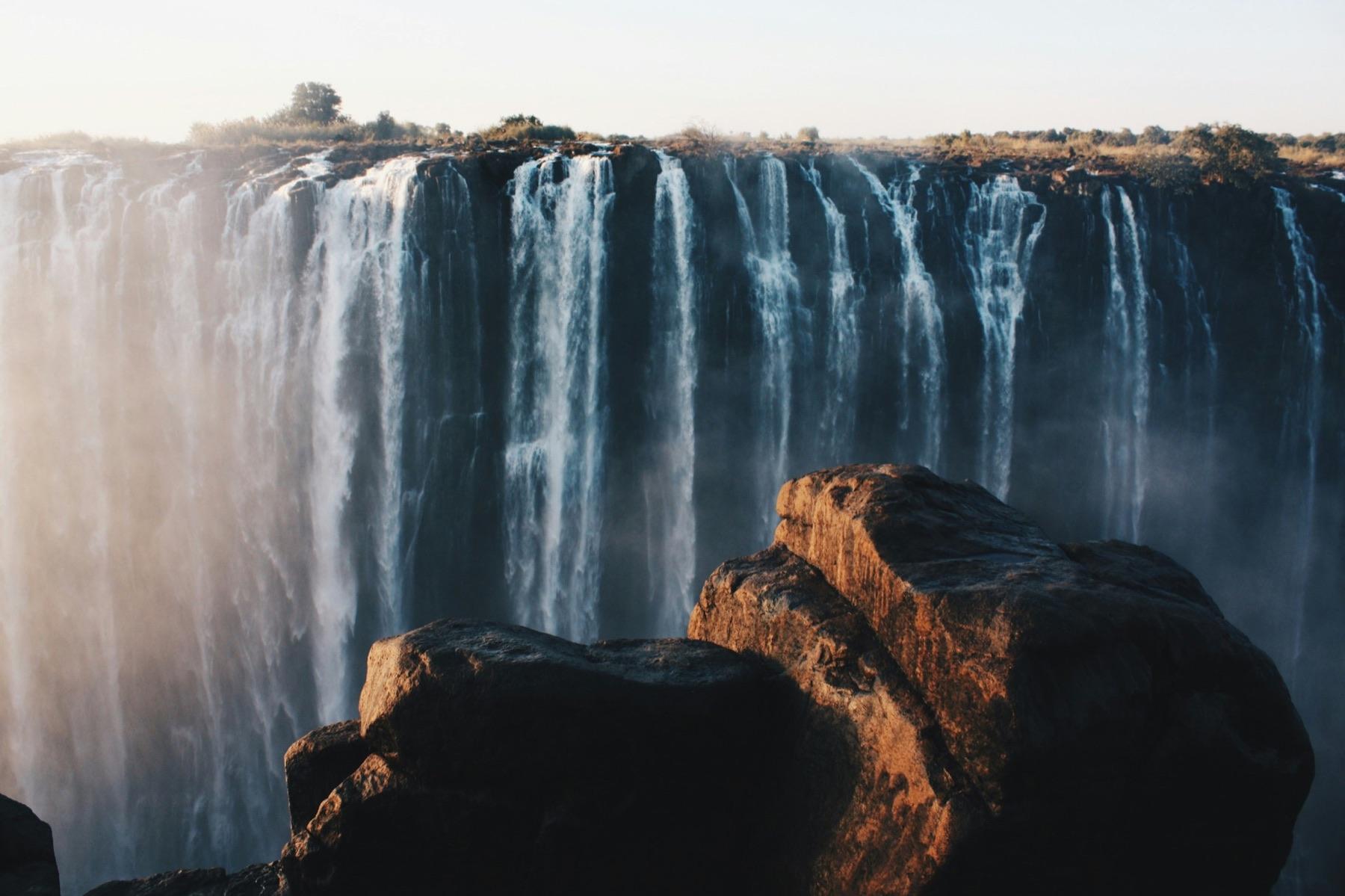
High water at Victoria Falls, roughly March to June, gives you the most water and the most noise, but so much spray that you often can't see the falls from the ground. Low water, roughly September to December, gives you clear views, Devil's Pool and the best rafting, but the Zambian side can shrink to a bare cliff. Neither is better; they suit different trips. The months between, July and August, and January and February, are the compromise.
For the month-by-month detail, see the best time to visit Victoria Falls. This page compares the two extremes directly so you can decide which one you want.
Why the water changes
The flow at the falls depends on rain that falls hundreds of kilometres upstream in Angola and north-western Zambia between November and March. That water takes months to arrive. So the falls peak in April or May, after Livingstone's own rains have finished, and they are at their lowest in November, just as the local rains start.
The difference is large. At the peak, the river can carry well over ten times its low-season flow. In wet years the spray column, which gives the falls their local name, Mosi-oa-Tunya, "the smoke that thunders", can be seen from 30 km away or more.
Side by side
| High water (about March–June) | Low water (about September–December) | |
|---|---|---|
| What you see from the ground | A wall of white water and spray; at the peak, often little else | The full face of the gorge, separate streams, bare basalt on the Zambian side |
| How wet you get | Soaked within minutes on the main paths | Mostly dry on the Zambian side, some spray in Zimbabwe |
| Best side | Either; Zambia for the drama, Zimbabwe for the more open viewpoints | Zimbabwe, which keeps the Main Falls flowing |
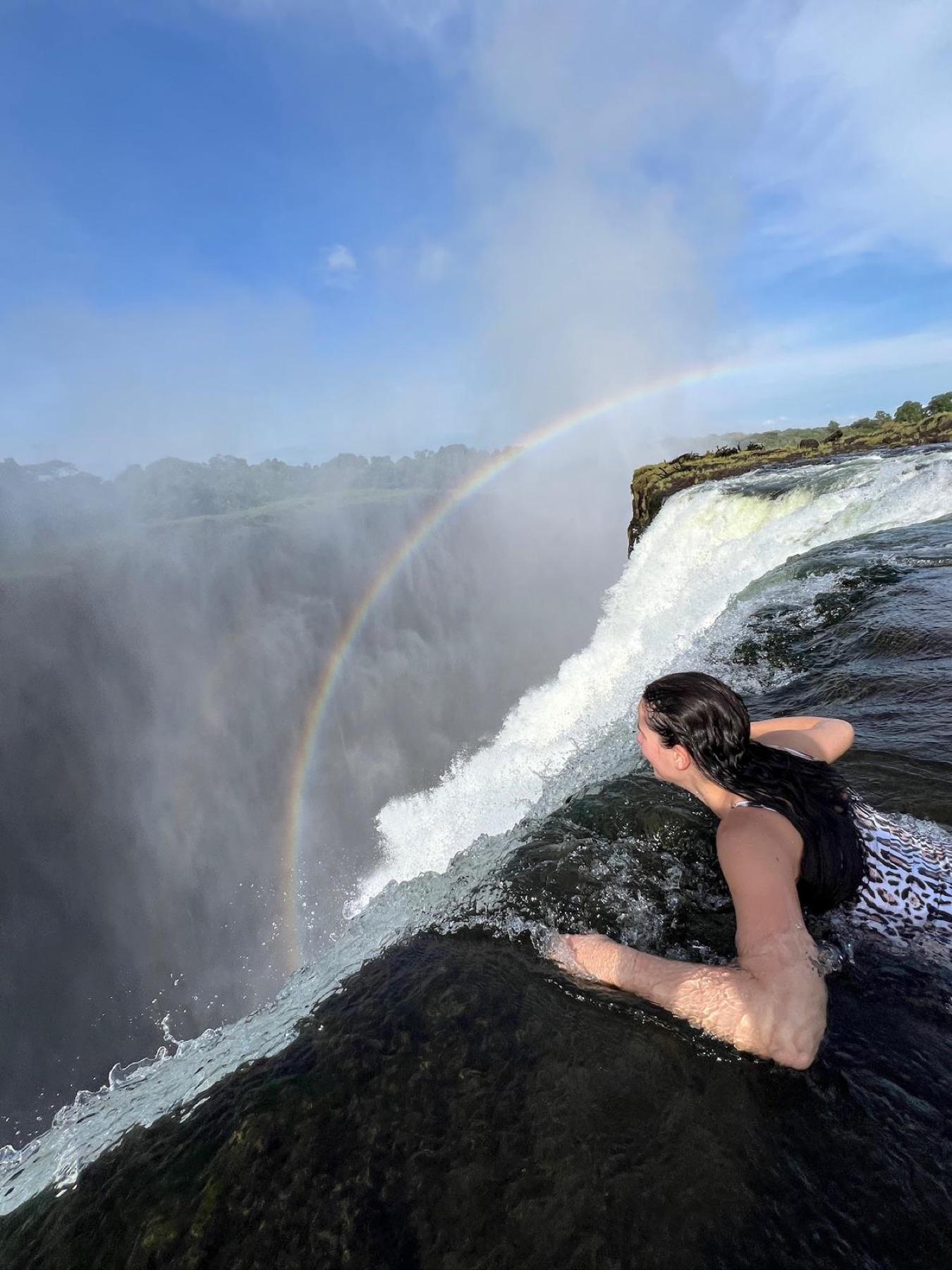
| Devil's Pool | Closed | Usually open from about mid-August |
| Rafting | Closed at the peak; shorter runs either side of it | Full run through the Batoka Gorge, rapids at their best |
| Lunar rainbow | Possible at full moon | Rarely, as there is too little spray |
| From the air | Huge spray column, dramatic | Clear view of the full width and the gorges |
| Weather | Warm days, cooling from May | Hot, often over 30 °C, rain from November |
| Landscape | Green after the rains | Dry and dusty until the first storms |
What high water is like
You hear it before you see it. On the Zambian side, the path to Knife-Edge Bridge is under what feels like a sustained downpour, and on the bridge itself you see only white. Raincoats keep your top half partly dry for the first few minutes. On the Zimbabwean side, the viewpoints nearer Devil's Cataract give the clearest glimpses; further east they disappear into cloud.
It is exhilarating and loud, and many people prefer it for that. The trade-offs are that photography is hard, the paths are slippery, and the activities that use the river below the falls are restricted.
The best way to see high water properly is from above. A helicopter flight shows the full curtain and the spray rising above it, which you simply can't see from the paths in April.
What low water is like
On the Zambian side, the Eastern Cataract can dwindle to thin threads, or stop, by October or November. Visitors who arrive expecting the postcard view are sometimes disappointed. Others enjoy seeing the gorge laid bare: the columns of basalt, the pools on the lip and the scale of the drop, which is over 100 m.
On the Zimbabwean side, the Main Falls and Devil's Cataract continue to pour over all year, and the views are clear. If you visit in low water and have time for only one side, choose Zimbabwe; our Zambia or Zimbabwe guide covers the logistics.
Low water is also when the river becomes the activity. Livingstone Island tours lead to Devil's Pool on the very lip of the falls. The Batoka Gorge rafting, with its long sequence of big rapids, runs in full. And with less water on the Zambian side, you can walk out across rock that is under a torrent in April.
The in-between months
July and August are the favourite months for many visitors and photographers: plenty of water over the whole width, spray low enough to see through, clear skies and cool mornings. Devil's Pool often opens towards the end of August.
January and February see the falls rising again. The Zambian side refills, the bush is green, and there are fewer visitors, though the local rains are at their heaviest.
Which to choose
- First visit, want to see the falls themselves: June to August.
- Want maximum power, don't mind getting wet: April and May.
- Devil's Pool or serious rafting: September to December.
- Photographs from the ground: July and August, mornings.
- Lunar rainbow: full-moon nights from about April to July.
The upper Zambezi above the falls changes too. In high water the river spreads wide and fast around its islands; in low water sandbanks appear and hippos and elephants gather along the exposed edges. A riverside lodge upstream, such as Zambezi Dusk, gives you that river all year, whichever state the falls are in.