Livingstone gives you three broad choices: stay in the town itself, stay on the Zambezi upstream of the falls, or stay close to the falls at the southern end of town. Most visitors who come for more than a night or two choose the riverfront, because the river is the reason to be here. The town suits budget travellers and people relying on public transport. Staying by the falls suits short, falls-focused trips.
The areas are close together. Nothing described here is more than about 40 minutes' drive from anything else, so the decision is about the feel of your stay as much as the location.
The town centre
Livingstone's centre is a grid of streets around Mosi-oa-Tunya Road, with banks, supermarkets, the Livingstone Museum, markets and most of the backpacker hostels and guesthouses. It is a working Zambian town rather than a resort, which many visitors like.
Distances: about 10 km to the falls and roughly 5 km to the airport.
Suits: budget travellers, solo travellers and people who want restaurants, shops and other travellers within walking distance during the day.
Trade-offs:
- No river views or wildlife on the doorstep.
- You need a taxi or shuttle to the falls and to activities, though many operators collect from town for free.
- Walking around at night is not advisable.
Activities such as the markets and craft stalls and the museum are easiest from here.
Upstream riverfront
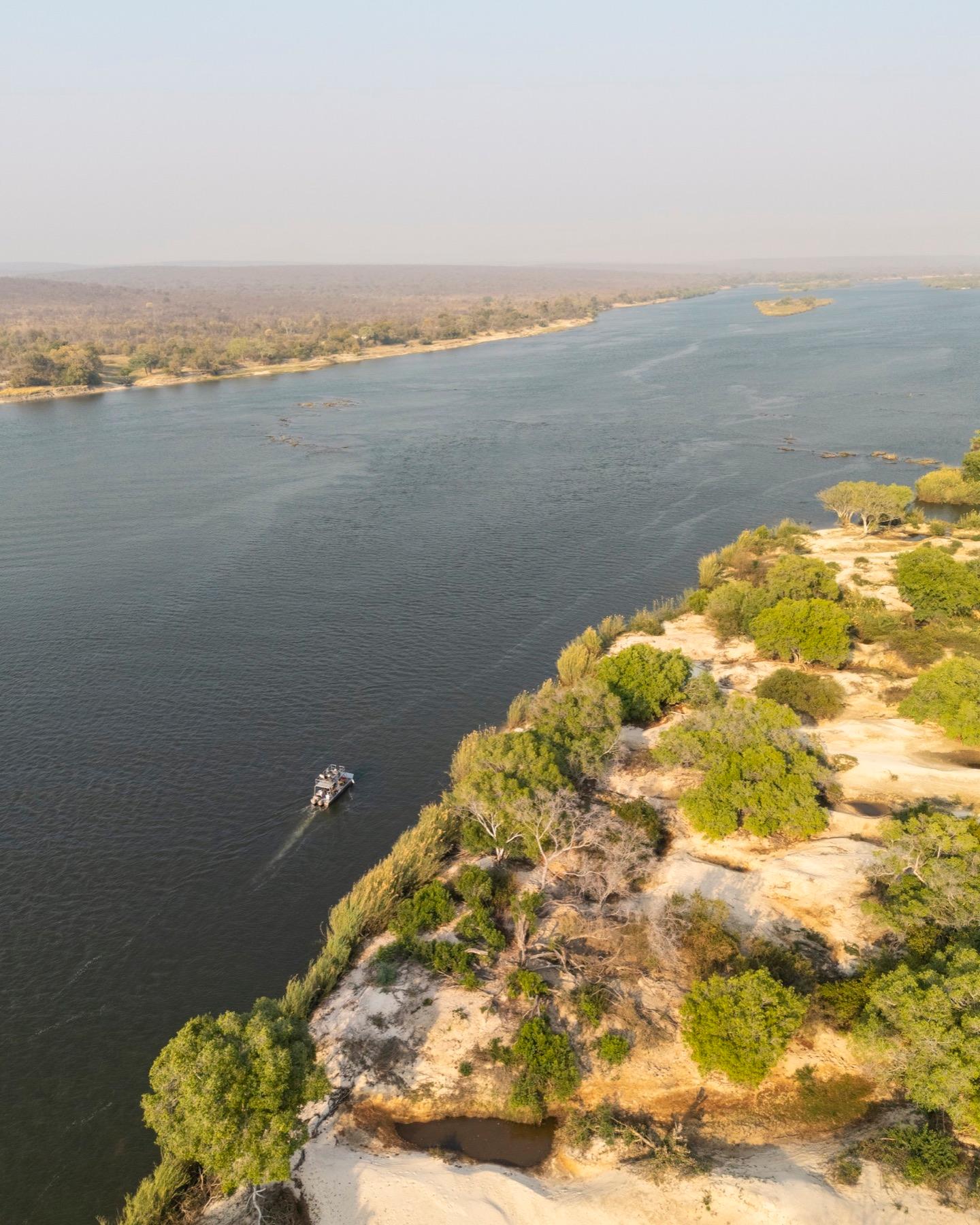
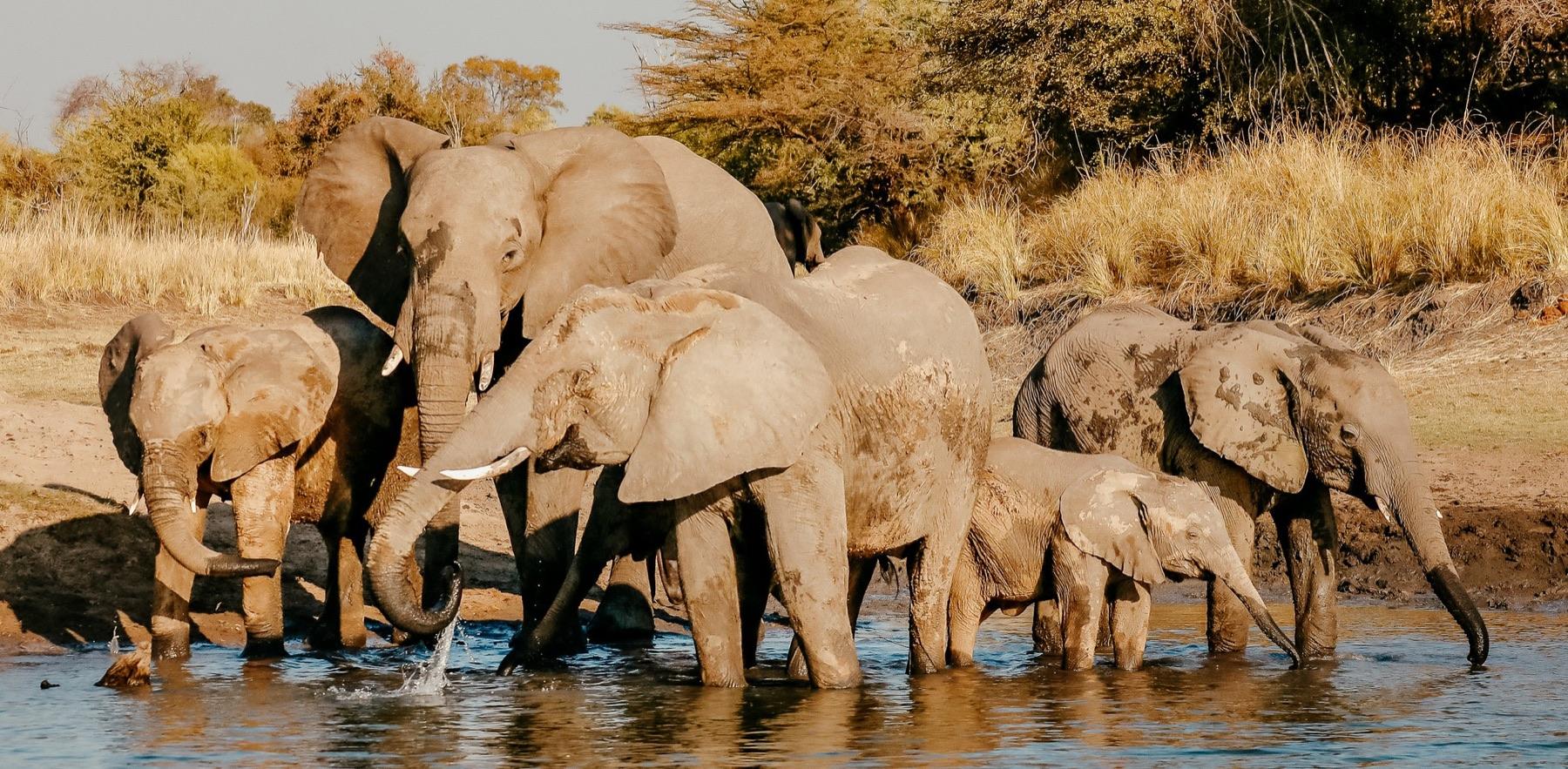
West of the falls, the Zambezi is wide, slow and dotted with islands. Lodges line its north bank along the Kazungula Road and the roads off it, stretching from just above the falls to well over 20 km upstream. Hippos, crocodiles and birds are routine, and elephants often cross from the islands or the national park in the dry season.
Distances: typically 15 to 40 minutes' drive from the falls, and a similar distance from the airport, depending on how far upstream you are.
Suits: couples, families, anyone staying three nights or more, and people who want the river to be part of the trip rather than something they visit.
Trade-offs:
- You depend on transfers or your own vehicle to go anywhere.
- Further-out lodges add drive time to every activity, which matters if you plan to do a lot.
- Places to stay here are generally more expensive than in town.
What you get in return is the river itself. Many riverfront lodges have their own boats, so a morning or sunset cruise on the Zambezi can start from your own jetty. Evenings are quiet, often with hippos calling from the water.
One option upstream: Zambezi Dusk
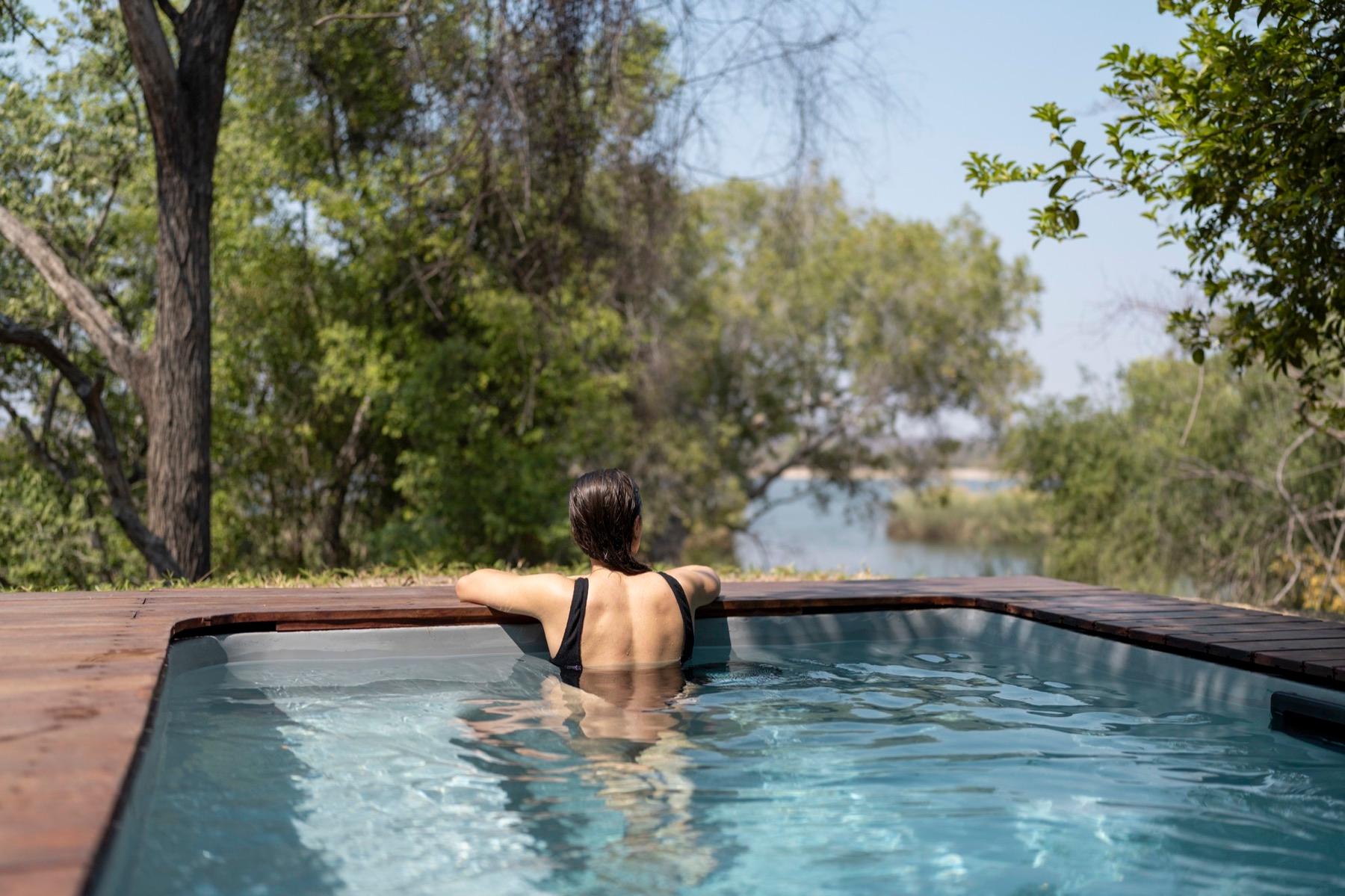
Zambezi Dusk is a small, family-owned safari lodge on the banks of the Zambezi upstream of the falls, at 749 B Kazungula Road. It is about 30 minutes from Victoria Falls by road and a short drive from Livingstone airport. Accommodation is in luxury safari tents, Superior Zambezi Chalets and the Zambezi Dusk Villa, and the lodge is deliberately small, with only a few suites.
Stays are fully inclusive: meals using local ingredients, selected drinks, airport transfers, two guided boat safaris a day from the lodge, and two daily activities from its list of guided experiences. Stays of two nights or more include one spa treatment. Other activities, such as Devil's Pool, rafting, a bungee jump or a Chobe day trip, are arranged through partners and depend on the season. Details of the villa are on the villa's own site.
Near the falls
At the southern edge of Livingstone, the road runs past a cluster of hotels and lodges close to the falls and the entrance to Mosi-oa-Tunya National Park. Some are within walking distance of the falls themselves, and the Victoria Falls Bridge and Zimbabwe border are a few minutes away.
Distances: from walking distance up to about 10 minutes' drive from the falls; about 15 to 20 minutes to the airport.
Suits: short stays of one or two nights, people who want to visit the falls several times at different times of day, and anyone planning to cross to Zimbabwe more than once.
Trade-offs:
- Generally the most expensive area per night.
- More of a resort feel, and busier.
- You are close to the falls but often away from the quieter stretches of river.
Choosing between them
| Town centre | Upstream riverfront | Near the falls | |
|---|---|---|---|
| Drive to the falls | About 15 min | 15–40 min | Walk to 10 min |
| River views | No | Yes | Some |
| Wildlife around the lodge | Little | Hippos, birds, often elephants | Some |
| Price range | Lowest | Mid to high | Mid to high |
| Best for | Budget, short stays | Longer stays, couples, families | One or two nights, falls-focused |
A few rules of thumb:
- Two nights or fewer, focused on the falls: near the falls or town.
- Three nights or more: upstream, where the river and boat trips add something every day.
- Doing a lot of activities: check pick-up zones. Many operators include transfers from town and the falls area, but charge extra for lodges far upstream.
- Travelling in high-water months (March to May): you will be soaked at the falls; somewhere with space to dry off and a quiet afternoon helps. See the best time to visit Victoria Falls.
Practical points wherever you stay
- Mosquitoes: Livingstone is in a malaria area. Check that rooms have nets or screens, and see health and malaria at Victoria Falls.
- Power cuts: Zambia has had long periods of scheduled power cuts in recent years. Ask whether the place has backup power or solar.
- Payment: many lodges quote in US dollars, but rules on paying in kwacha have tightened. See money and payments in Zambia.
- Wildlife: at riverfront lodges, hippos and elephants walk through at night. Follow the staff's advice about moving around after dark.
For how a stay in each area fits into a few days in the region, see the 3-day Livingstone itinerary.