The Boiling Pot is the whirlpool at the foot of Victoria Falls, where the water that has fallen into the First Gorge swings sharply right into the Second Gorge under the Victoria Falls Bridge. On the Zambian side a steep trail of about 600 to 700 m leads down to it from the main falls trails in Mosi-oa-Tunya National Park. It takes 15 to 20 minutes down and about 25 to 30 back up, is included in the park entry fee, and is best between about July and December, when the water is lower.
Where the trail starts
From the park entrance, beside the Zambian border post, follow the paths towards the falls. The Boiling Pot trail branches off near the start of the trail network and is signposted; ask at the gate if you cannot find it. It drops through a grove of palms and riverine trees (often called the Palm Grove), then descends on rough stone steps cut into the side of the gorge.
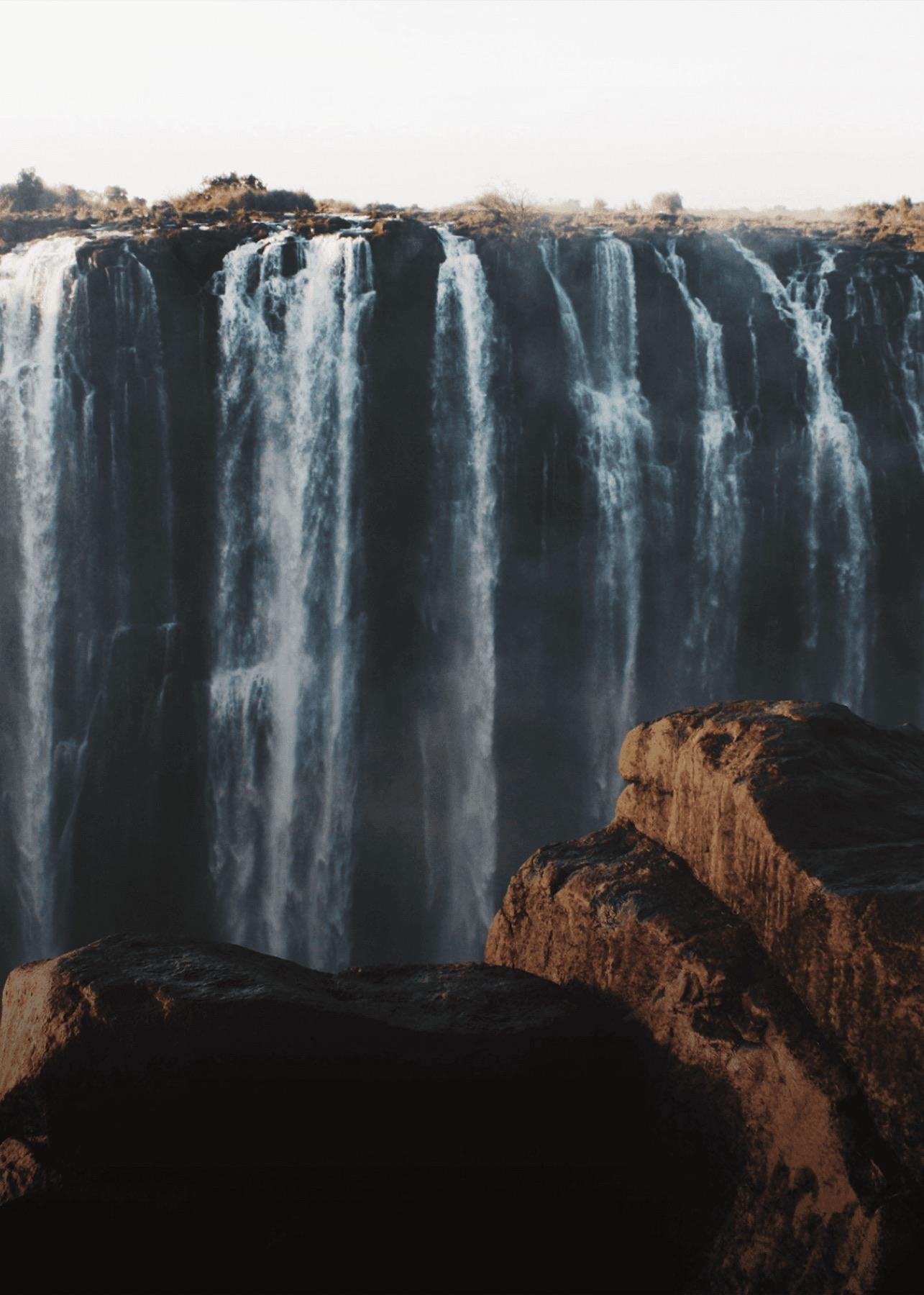
At the bottom you come out on large basalt boulders at the edge of the river. In front of you, the Zambezi spins round the bend; above and downstream is the steel arch of the bridge. Look upstream and you see into the narrow slot of the First Gorge, with the falls throwing up spray at its far end.
Our guide to Mosi-oa-Tunya National Park covers the other trails, the Knife-Edge Bridge and the park fees.
How hard is it?
The distance is short, but it is steep. A signboard at the top has given about 629 m with 15 minutes down and 25 minutes up, which is about right for someone fit; others take longer and stop for breath. The steps are irregular, some high, and can be slippery with spray or dust. The last section is a scramble over boulders.
You need:
- Shoes with good grip. Not flip-flops.
- At least a litre of water in the hot months.
- Both hands free; carry things in a small backpack.
It is not suitable for anyone with limited mobility or knee problems, and young children need close supervision near the water. See our page on Victoria Falls with kids for family-friendly options.
Best months
| Months | What you see | Conditions |
|---|---|---|
| July to December | Water lower, whirlpool clearly visible, rocks exposed | Dry; hot from September, often 35 °C or more |
| January to February | River rising | Rain; path may be muddy |
| March to May | Peak flood: a churning, roaring mass of water | Path may be closed or soaked; rocks at the bottom under water |
| June | Water dropping | Still wet; spray heavy |
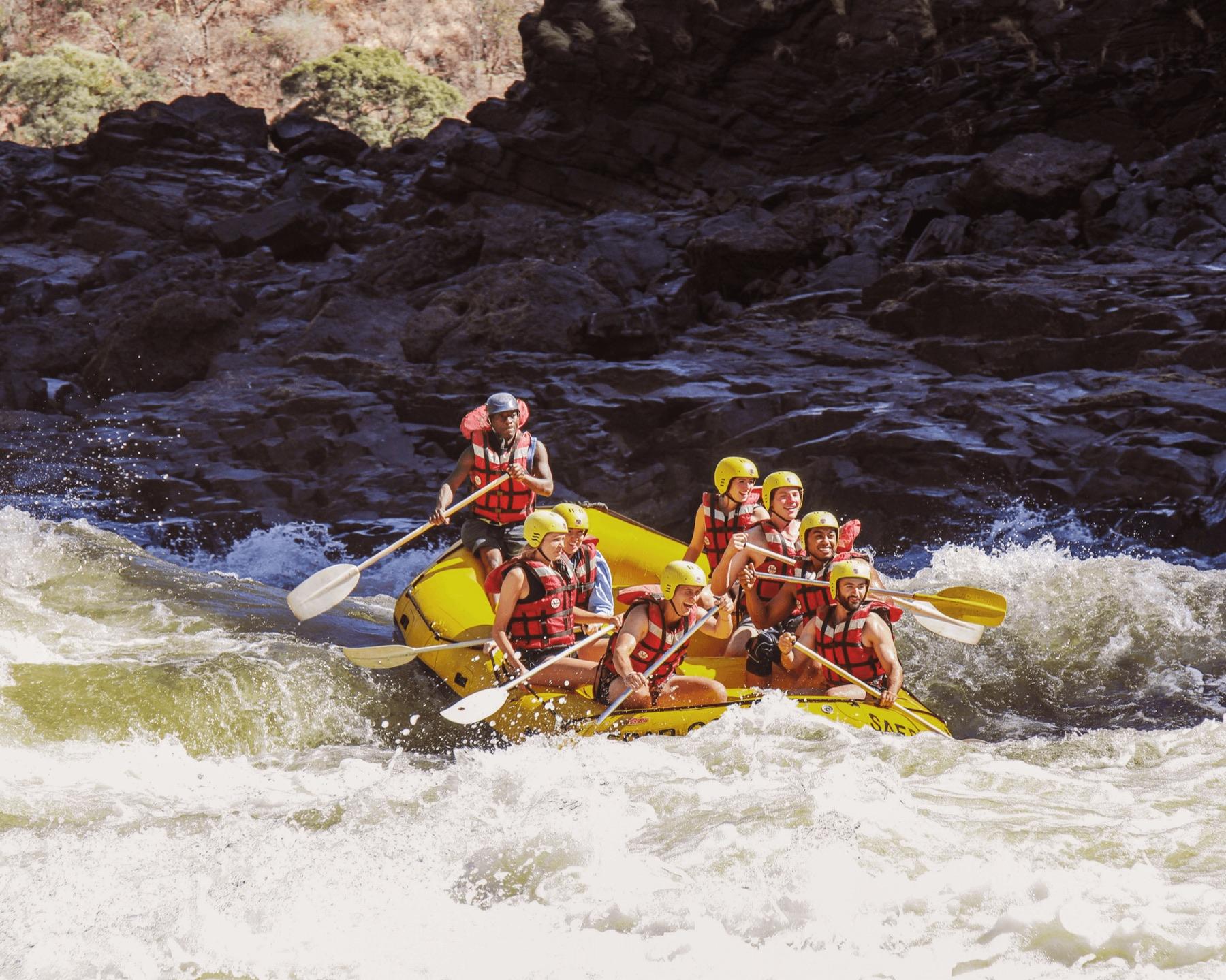
At low water, from about August to December, the white water rafting trips put in near the Boiling Pot, and rafters come down this same path with their guides. You may see them launch.
Safety
- Stay well back from the water. The current at the Boiling Pot is very strong and the rocks are slick. Swimming is out of the question.
- Baboons are common on the trail. Do not carry food in your hands or in an open bag, and do not stare them down. If they approach, keep walking calmly.
- Heat: in October and November the gorge traps heat. Go early, ideally when the park opens, and turn back if you feel unwell.
- Go with someone: the trail can be quiet, and there is little phone signal at the bottom.
Guided or alone?
You do not need a guide; the trail is clear. But a guide from the park or a tour adds context: the geology of the gorges, how the falls have cut back over millennia, and the plants and birds on the way down. If you are visiting the falls as part of an arranged trip, ask whether the guide will do the hike with you.
Fitting it in
The Boiling Pot adds about an hour and a half to a visit to the Zambian side. Do it first, while it is cool, then walk the main trails. If you have energy left, the Victoria Falls Bridge is a short walk from the park entrance through the border post.
Zambezi Dusk, about 30 minutes upstream by road, arranges Victoria Falls visits and white water rafting through partner operators; its experiences page shows how those fit around its daily boat safaris.