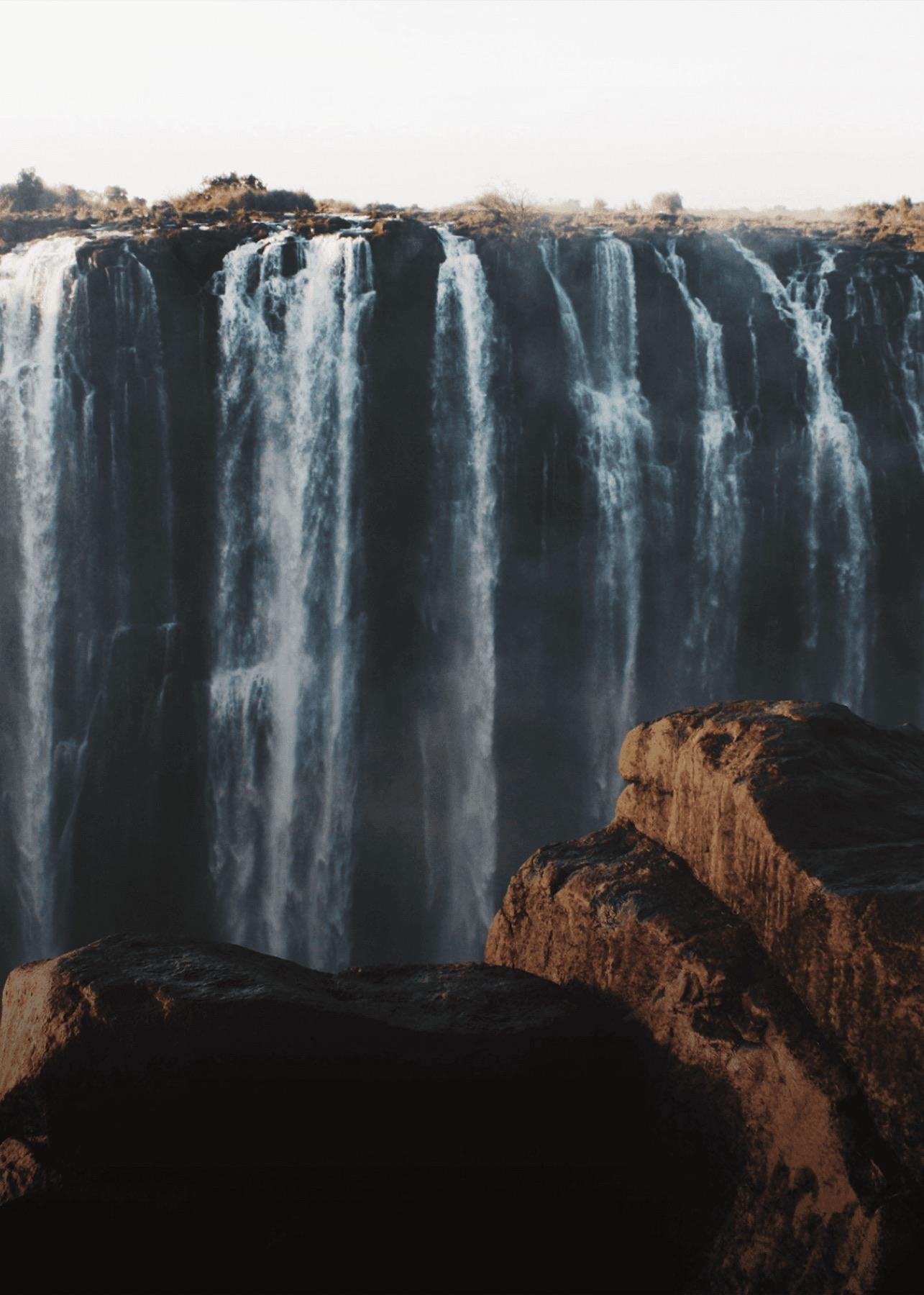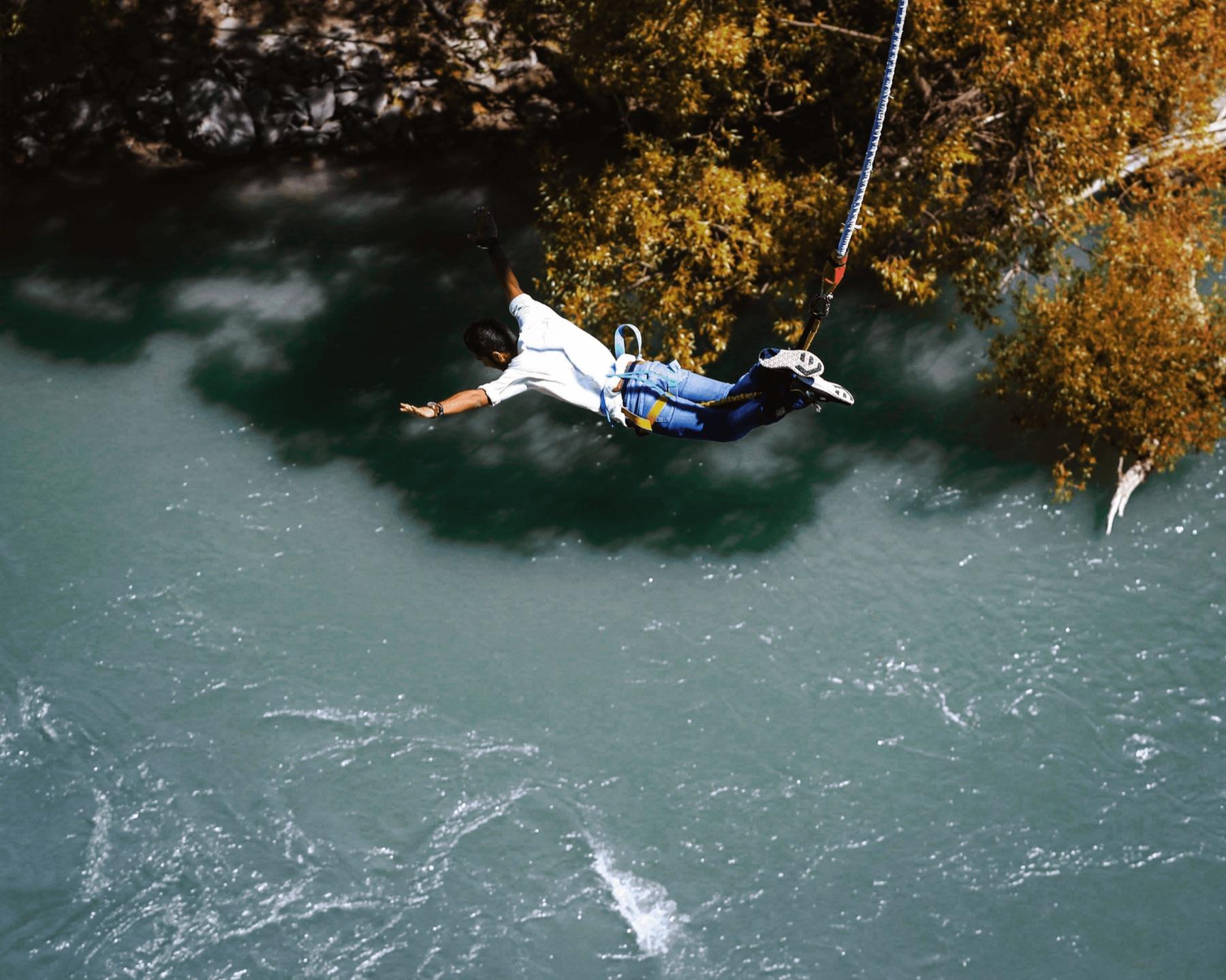
The Victoria Falls Bridge is the steel arch that carries road, rail and pedestrians across the Batoka Gorge between Zambia and Zimbabwe, just below the falls. It opened in 1905. You can walk out to the middle from the Zambian side on a free gate pass, cross fully into Zimbabwe on foot if your visa allows, or take a guided tour along the catwalks underneath the deck. The bridge is also home to the 111 m bungee jump.
A short history
The bridge was part of Cecil Rhodes's plan for a railway from the Cape to Cairo. Rhodes never saw the falls and died in 1902, before work began, but the often-told story is that he wanted the bridge close enough for spray to fall on passing trains.
It was designed by George Andrew Hobson of the consulting engineers Douglas Fox and Partners, and built by the Cleveland Bridge and Engineering Company of Darlington, in the north-east of England. The steel was made in England, shipped to Beira in Mozambique and brought up by rail. The two halves of the arch were built out from each side of the gorge, held back by cables anchored into the rock, and met in the middle in 1905. The bridge was officially opened on 12 September 1905.
Some figures:
| Total length | About 198 m |
| Main arch span | About 156.5 m |
| Height of deck above the river | About 128 m at low water |
| Built | 1904–1905 |
Today the bridge carries road traffic, a railway line and pedestrians. The border between Zambia and Zimbabwe runs through the middle and is marked by a sign.
The bridge tour
The guided bridge tour is the best way to understand the structure. It usually lasts about two hours: a talk on the building of the bridge, with archive photographs, followed by a walk on the service catwalks under the road deck, clipped to a safety line. You walk among the steelwork with the river far below and the spray drifting up the gorge in high water. It is not physically hard, but it is not for anyone who struggles with heights.
At the time of writing the tour costs roughly US$64 per person, with hotel transfers sometimes included and sometimes not. There is a minimum age, often given as 14 for the walk beneath the bridge, so check if you are travelling with children. Wear closed shoes and take your passport, since the bridge sits between the two border posts.
Walking onto the bridge from Zambia
You do not need a tour to stand on the bridge. From the Zambian side:
- Go to the Zambian border post next to the entrance to the falls in Mosi-oa-Tunya National Park, about 10 km from Livingstone town.
- Show your passport at immigration and say you only want to visit the bridge. You should be given a gate pass, a slip of paper that lets you through the gate and back without being stamped out.
- Walk down the road to the bridge. It is roughly 1 km, mostly downhill on the way there and uphill on the way back.
- Walk out to the middle, look upstream at the falls and down the gorge, then return the same way and hand in your pass.
The gate pass is usually free. Take your passport even if you are only going to the middle. Allow an hour or so for the round trip at a stroll. Late afternoon is pleasant, and from about February to June you will see the spray cloud rising over the falls.
Crossing into Zimbabwe on foot
Walking across the border is straightforward and many people do it to see the falls from the Zimbabwean side.
- Get stamped out at the Zambian post.
- Walk across the bridge and on to the Zimbabwean border post, roughly 500 m beyond the end of the bridge.
- Clear Zimbabwean immigration. From there the entrance to Victoria Falls National Park and Victoria Falls town are a short walk.
The important part is your visa. If you plan to go back to Zambia the same day or later in your trip, check whether you need a double-entry visa, a day-tripper arrangement or the KAZA Univisa, which covers both countries. Rules and availability have changed several times in recent years; see our guide to the KAZA Univisa for the current position, and our comparison of the Zambian and Zimbabwean sides to decide whether the crossing is worth it.
Border hours run from early morning to evening. Check the closing time before you set off, so you are not caught on the wrong side.
Things to know on the walk
- People will offer to sell you old Zimbabwean banknotes and carvings along the road. A polite no is enough.
- Baboons are common near the border posts and will take food from hands and bags.
- Trucks queue on the approach roads. Keep to the footpath.
- There is little shade between the Zambian post and the bridge. Take water and a hat from September to November, when it regularly passes 35 °C.
The bungee jump and other activities
The 111 m bungee jump from the middle of the bridge has been running for decades and remains one of the best-known activities at the falls. A solo jump costs roughly US$190 at the time of writing, and a bridge swing and zip line also operate in the gorge. Expect weight and age limits and a waiver. Guests at Zambezi Dusk can have the bungee arranged through the lodge's partner operators.
Fitting it in
The bridge pairs naturally with a morning at the falls trails in Mosi-oa-Tunya National Park, since the border post and the park entrance are side by side. The history makes more sense if you have seen the railway and bridge displays at the Livingstone Museum first.