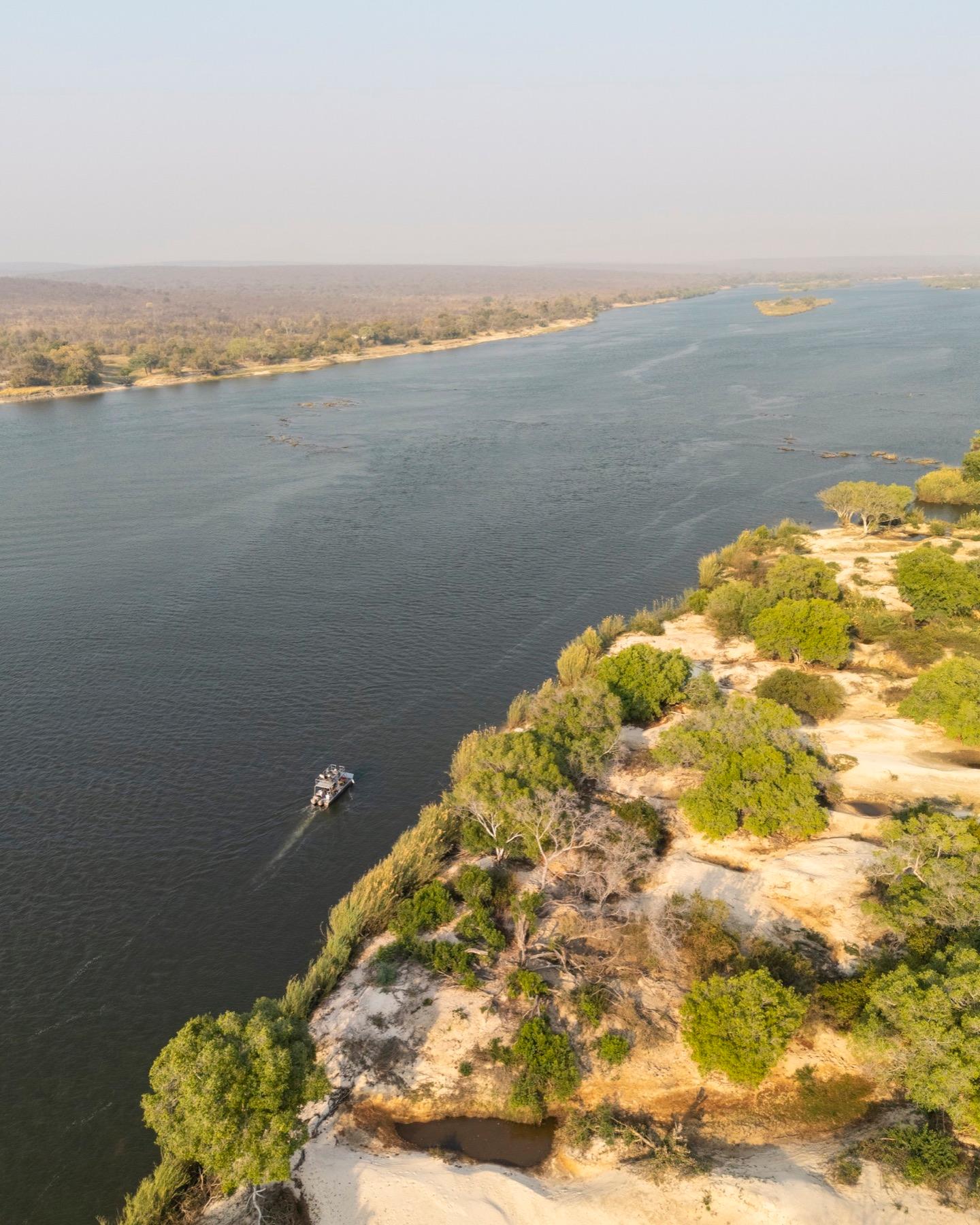
Horse riding in Livingstone usually means a guided ride of 1½ to 2 hours along the Zambezi upstream of town, on quiet tracks through riverine bush and open grassland, with a guide on horseback leading. Short rides take novices; longer rides are for experienced riders. At the time of writing a river ride costs roughly US$60 to US$75 per person, and most stables set a weight limit of about 85 to 95 kg.
What the rides are like
Most rides near Livingstone start along the river upstream of the falls; at least one stable is about 25 km from town, so allow 30 minutes or more each way. Rides go out early in the morning or in the late afternoon, when it is cool and animals are moving.
A typical river ride:
- Briefing and fitting: helmets are compulsory and provided. You are matched to a horse by height, weight and how you describe your riding.
- The ride: mostly at a walk for novices, with a chance to trot if you want to and the guide judges it safe. You follow the riverbank, cut through mopane and acacia woodland and cross open patches of grass.
- Wildlife: antelope such as impala and bushbuck, warthog, monkeys, and birds along the water. Depending on the route you may see giraffe or zebra, and hippos are usually audible if not visible. Elephants are possible near the river, and guides keep a careful distance.
Animals tend to treat a horse as another grazer, which means you can sometimes get closer than on foot or in a vehicle. It also means the guide has to read the animals and the horses at the same time; a good one will turn back early rather than push.
Longer rides, from half a day to multi-day trails, cover more ground and reach quieter country. These are for riders who can trot and canter confidently, stay on through a shy, and ride for several hours in heat.
Limits
| Typical figure (late 2026) | |
|---|---|
| Weight | About 85 to 95 kg; sometimes 80 to 85 kg for novices |
| Minimum age | Around 12 for river rides; younger children on led pony rides at some stables; 16 for longer trails, or with a parent |
| Experience | None for short rides; confident rider for full days |
| Helmets | Compulsory |
Weight limits are there for the horses, which work in heat on uneven ground. Stables do weigh riders who look close, and will turn you away. Some will offer a carriage ride or a led walk instead.
Prices
At the time of writing:
- River ride of about 1½ hours: roughly US$60 to US$75 per person.
- Children's pony ride: about US$20.
- Half-day and full-day rides: higher, and usually priced on request.
- Transfers from Livingstone may be extra.
Prices change, so confirm a current rate and whether transfers are included.
Best time to go
| Months | Conditions |
|---|---|
| May to August | Cool and dry; mornings can be cold, around 7 to 10 °C at sunrise in June and July. The best riding. |
| September to November | Dry, dusty and hot, often above 35 °C by midday. Ride at dawn. Good game near the river. |
| December to April | Rains; tracks get muddy, grass grows tall and visibility drops. Rides still run between storms. |
Our Victoria Falls weather by month has the temperatures in more detail.
What to wear
- Long trousers, ideally jeans or riding trousers, to stop chafing.
- Closed shoes or boots with a small heel. Trainers are acceptable on short rides; sandals are not.
- Neutral colours: khaki, green, brown. Bright white and red stand out to animals.
- A long-sleeved shirt for the sun and thorns.
- Sunscreen and a buff; your helmet replaces a hat.
Leave bags behind. A phone in a zipped pocket is fine, but you will want both hands on the reins when something moves in the grass.
What to ask before you book
- How many riders per guide, and is there a back-up guide on longer rides?
- Do guides carry a radio or phone, and what is the plan if a horse bolts or someone falls?
- Are novices kept at a walk, or will the group trot and canter?
- How are the horses cared for between rides, and how many rides do they do a day?
A well-run stable is happy to show you the horses and the yard before you ride.
Fitting it in
A ride makes a good first or last activity of a trip, since it fills a morning and leaves the afternoon free. Horse safaris also run on the Zimbabwean side, in and around the Zambezi National Park, which needs a border crossing and a visa that allows it; see our KAZA UniVisa guide. For a slower way to see the same river, our page on canoeing the upper Zambezi covers the water-level view.
Zambezi Dusk, on the Kazungula Road upstream of the falls, does not list horse riding among the activities it arranges, but its walking with rhinos and boat safaris cover much of the same wildlife on foot and from the river.