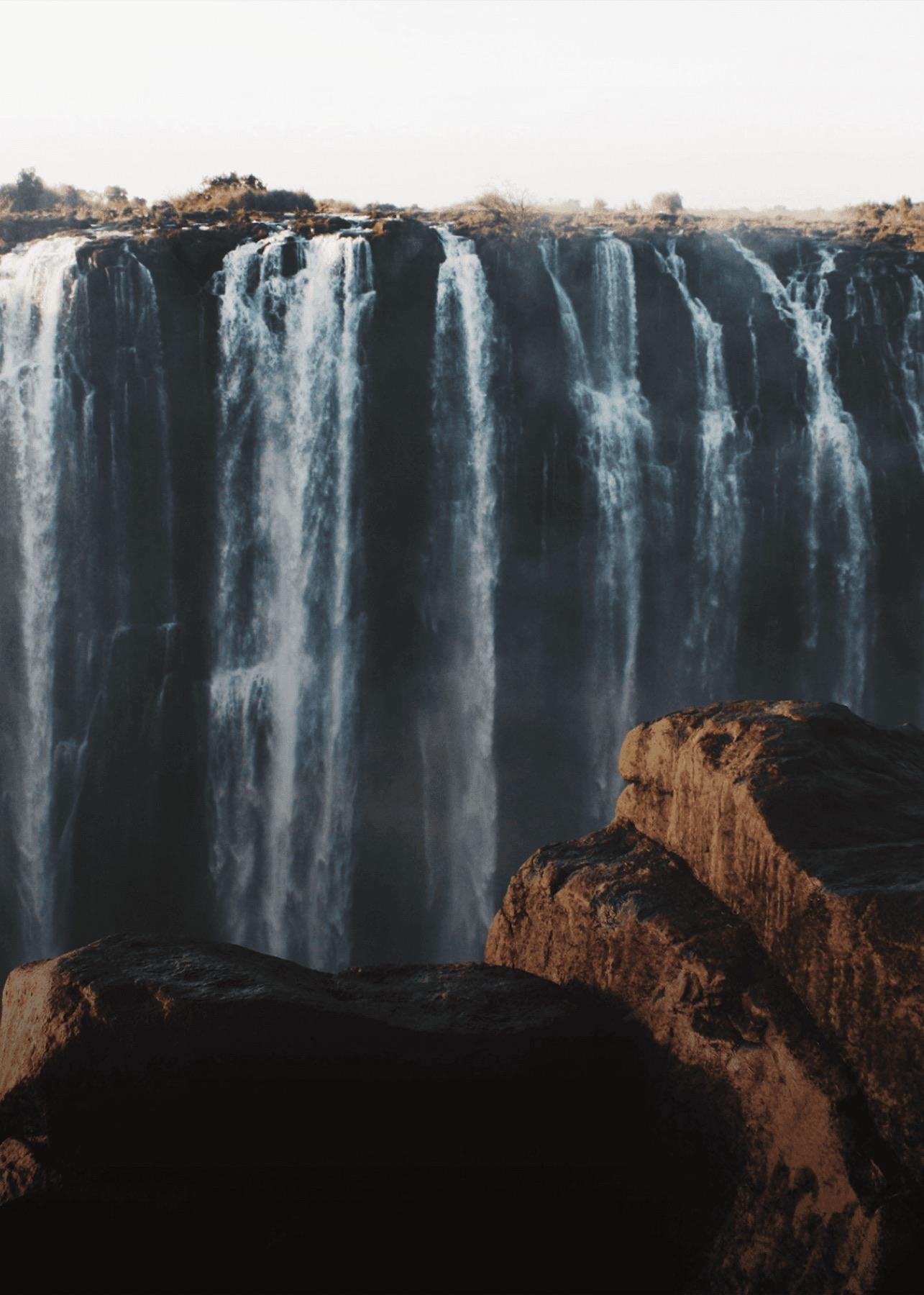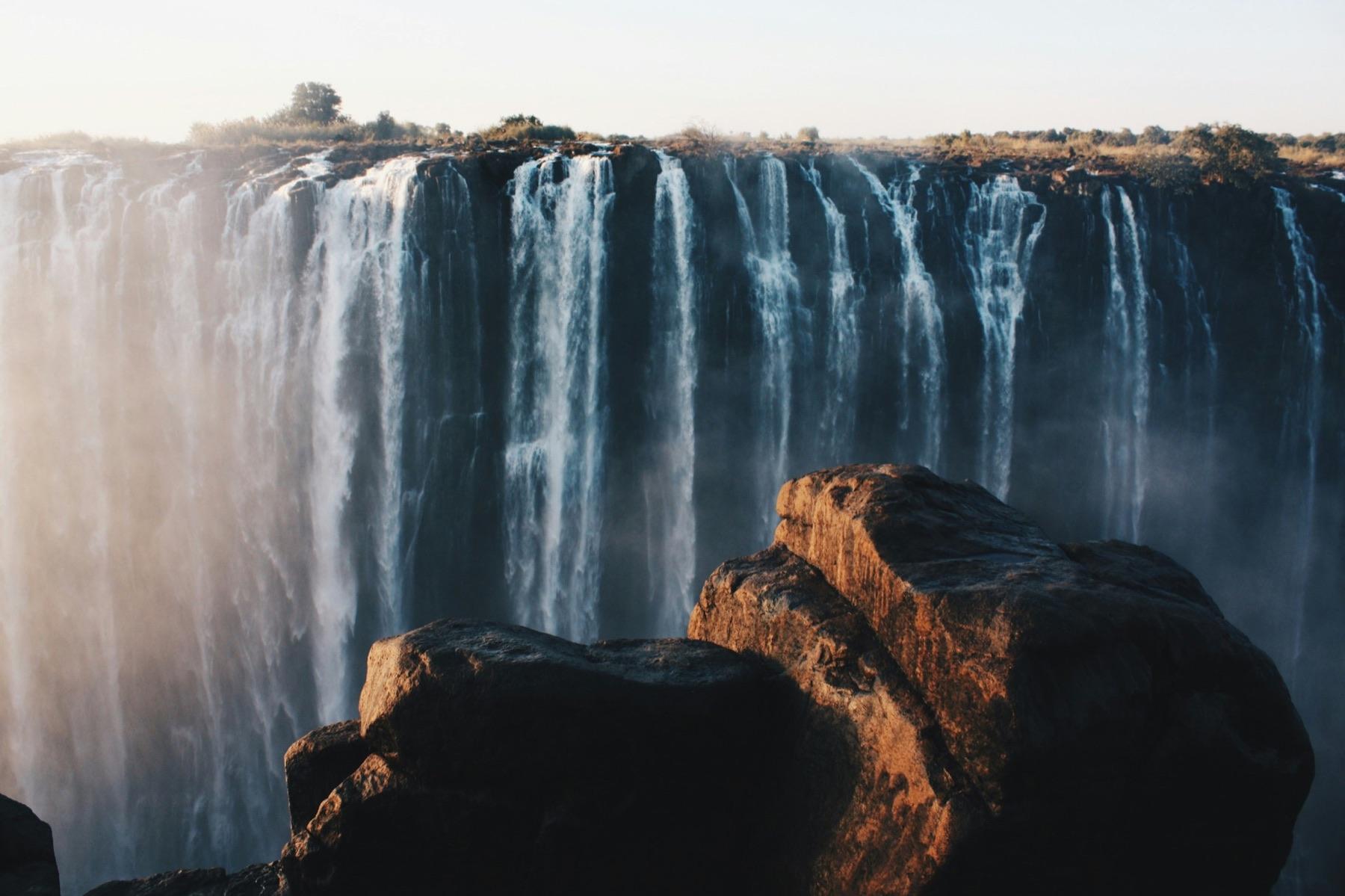
Victoria Falls and Iguazu are the two great waterfalls that sit on international borders, and they are built differently. Victoria Falls is one continuous curtain about 1,708 m wide dropping up to about 108 m into a narrow slot of a gorge. Iguazu is a horseshoe-shaped chain of roughly 150 to 275 separate falls, spread across about 2.7 km, with the highest drops around 80 m at the Devil's Throat. Victoria Falls is often described as the largest sheet of falling water in the world; Iguazu carries more water on average.
Neither is "better". They are different shapes, in different landscapes, and they reward different trips.
The figures
| Victoria Falls | Iguazu Falls | |
|---|---|---|
| Location | Zambia / Zimbabwe, Zambezi river | Argentina / Brazil, Iguazu river |
| Width | About 1,708 m, one continuous lip | About 2.7 km, in many separate falls |
| Height | Up to about 108 m | Up to about 80–82 m (Devil's Throat) |
| Mean flow | About 1,100 m³/s | About 1,700 m³/s |
| Peak months | Roughly March to May | Variable; often highest in the southern summer and autumn rains |
| UNESCO listing | 1989 (Mosi-oa-Tunya / Victoria Falls) | 1984 (Argentina), 1986 (Brazil) |
| Nearest airports | Livingstone (LVI), Victoria Falls (VFA) | Puerto Iguazú (IGR), Foz do Iguaçu (IGU) |
Flow figures are long-term averages from published hydrological data and vary year to year. Both rivers have had floods far above average: the Zambezi's 1958 flood is usually put at well over 10,000 m³/s at the falls, and Iguazu exceeded 40,000 m³/s in 2014.
Shape: why they look so different
Victoria Falls drops into a chasm only 60 to 120 m wide, cut along a crack in the basalt. You look at it across that gap, from the opposite rim, which is why the views are so close and the spray so heavy. The river then zig-zags away through a series of gorges.
Iguazu falls over a series of basalt steps in a wide arc, broken up by islands and forest. You see it from walkways that run above, below and out over the water, and the view keeps changing as you walk.
The short version: Victoria Falls is a wall; Iguazu is a landscape.
Seasons
Victoria Falls follows one rainy season, roughly November to March, with the water peaking a few months later, around March to May, as the flood arrives from upstream. By October to December the Zambian half can be close to dry, while the Zimbabwean side still carries water. The spray at peak can hide the falls from the ground, which is why many people fly over in those months. For month-by-month detail, see high water vs low water and the weather by month.
Iguazu has rain all year in a subtropical forest climate. Flow depends on rainfall upstream and on dams on the river, so it is less predictable by month. It is rarely "dry", though it can be noticeably lower in droughts, as in 2006 and again around 2020 to 2021.
What a visit is like
Victoria Falls
- The two sides: the Zambian side gives you the Knife-Edge Bridge and close views of the Eastern Cataract; Zimbabwe gives the long front-on view along the rim. See the best viewpoints.
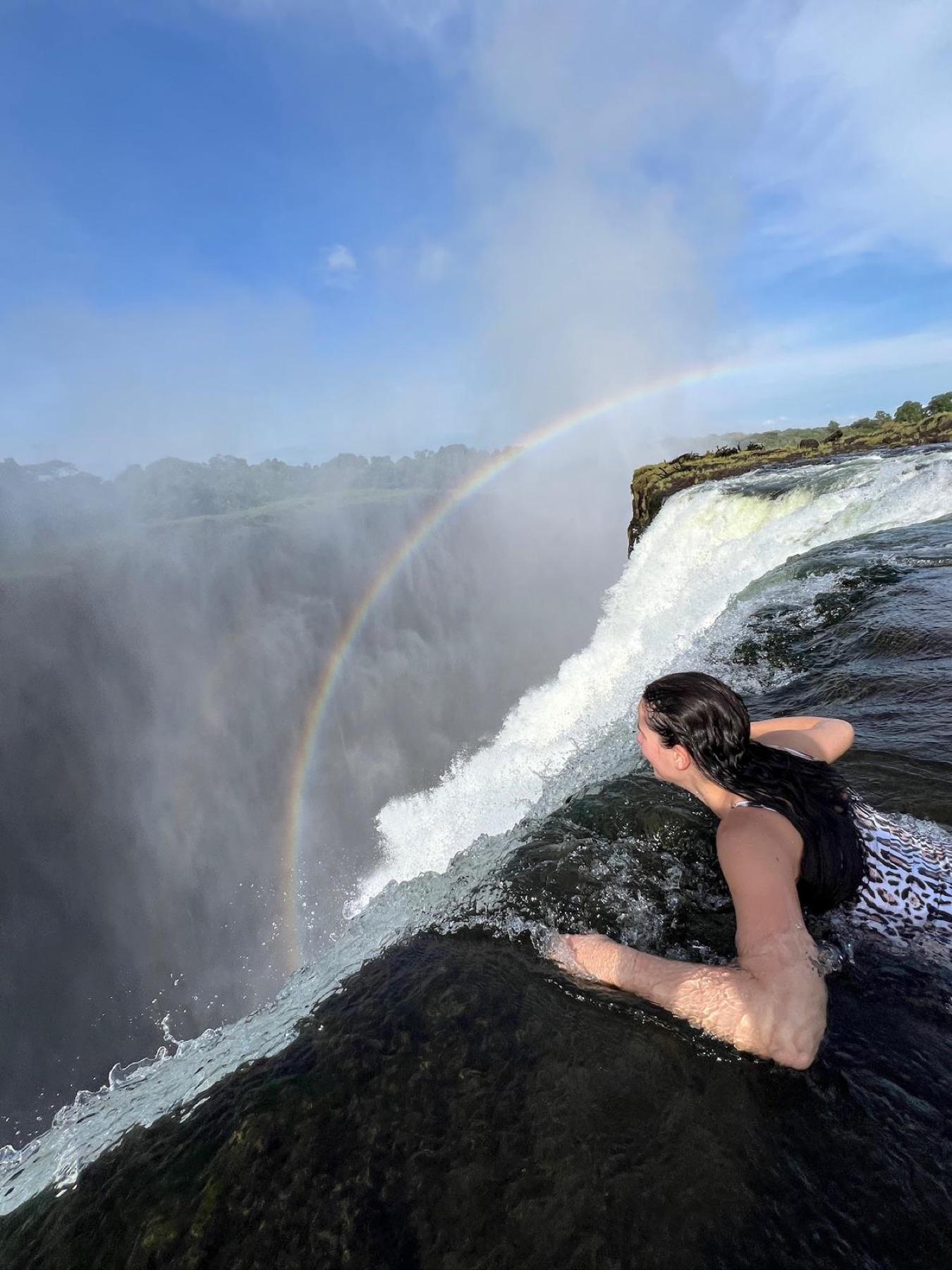
- On the edge: from about mid-August to January, you can swim in Devil's Pool on the lip of the falls, with a guide.
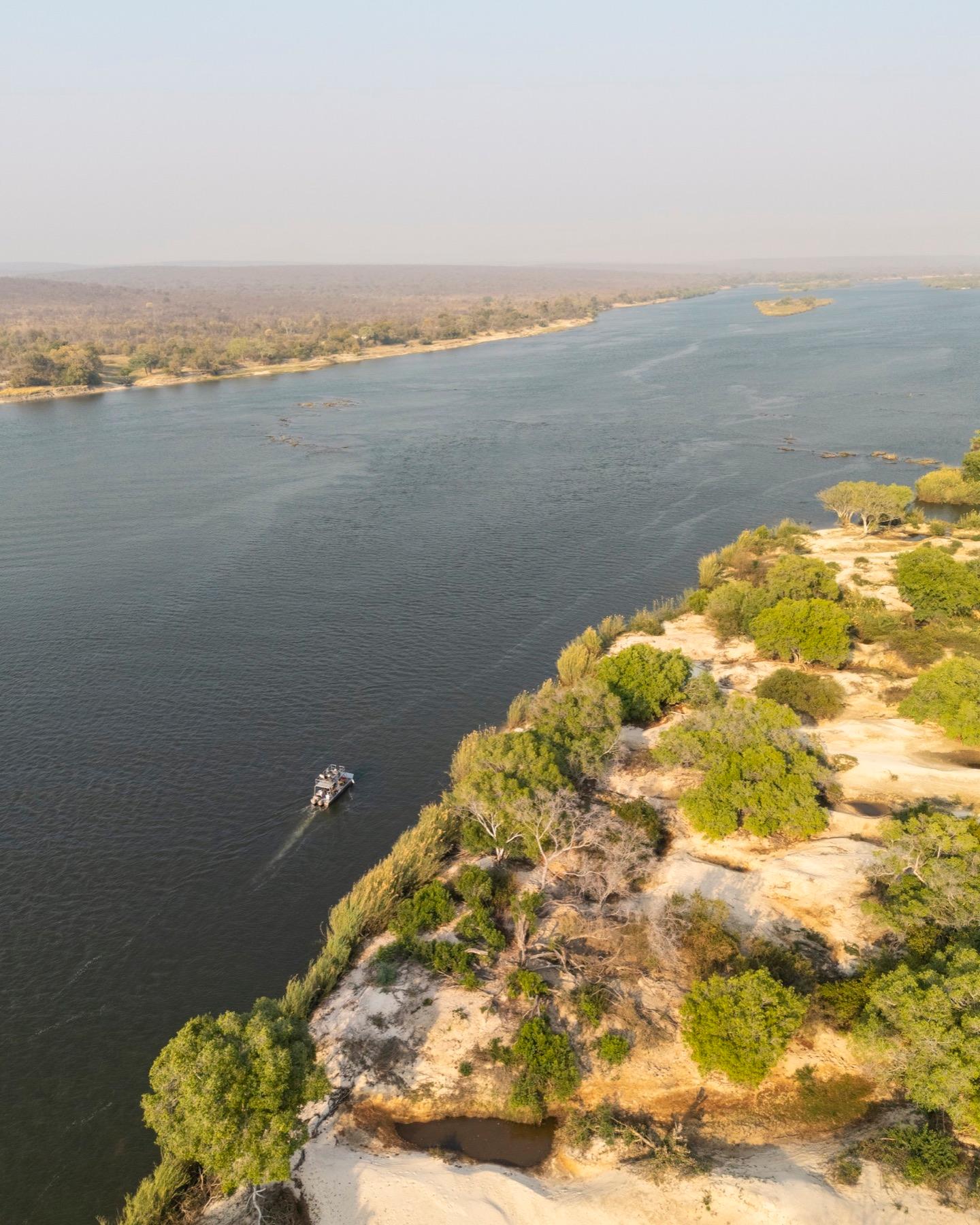
- Around it: white-water rafting in the gorges, bungee jumping from the bridge, helicopter flights, and the wide upper Zambezi above the falls with hippos, crocodiles and elephants.
- Scale: you can see the whole falls in a morning.
Iguazu
- Argentina has most of the falls and the walkways that take you close: the Upper and Lower Circuits and the long walkway out to the Devil's Throat, reached by a park train.
- Brazil has the panoramic view across the falls and a walkway into the spray below the Devil's Throat.
- Boats run into the spray at the base on both sides.
- Scale: most visitors spend a full day on the Argentine side and half a day on the Brazilian side.
Wildlife and setting
Iguazu is in Atlantic rainforest. Coatis around the walkways, toucans, butterflies in huge numbers, and swifts nesting behind the water.
Victoria Falls is in dry woodland and riverine forest at the edge of big-game country. Baboons and vervet monkeys in the park, elephants and buffalo nearby, hippos and crocodiles on the river above, and Chobe National Park in Botswana about 80 km away. The falls work as a base for a safari in a way Iguazu does not.
Getting there
Iguazu has domestic flights from Buenos Aires and São Paulo, among others, and is a short hop for most South American trips. Victoria Falls is usually reached via Johannesburg, with some direct regional and intercontinental connections; see how to get to Livingstone.
Which suits whom
- Iguazu if you like walking among water and forest, want a long day of varied views, or are already in Argentina or Brazil.
- Victoria Falls if you want the single huge curtain, the gorge, the adrenaline options and a safari in the same trip.
At Victoria Falls, much of the appeal is the river above it. Boat safaris on the upper Zambezi are part of most stays; you can see what a riverside lodge arranges around the falls to get a sense of how the days are usually split between the falls and the water upstream.