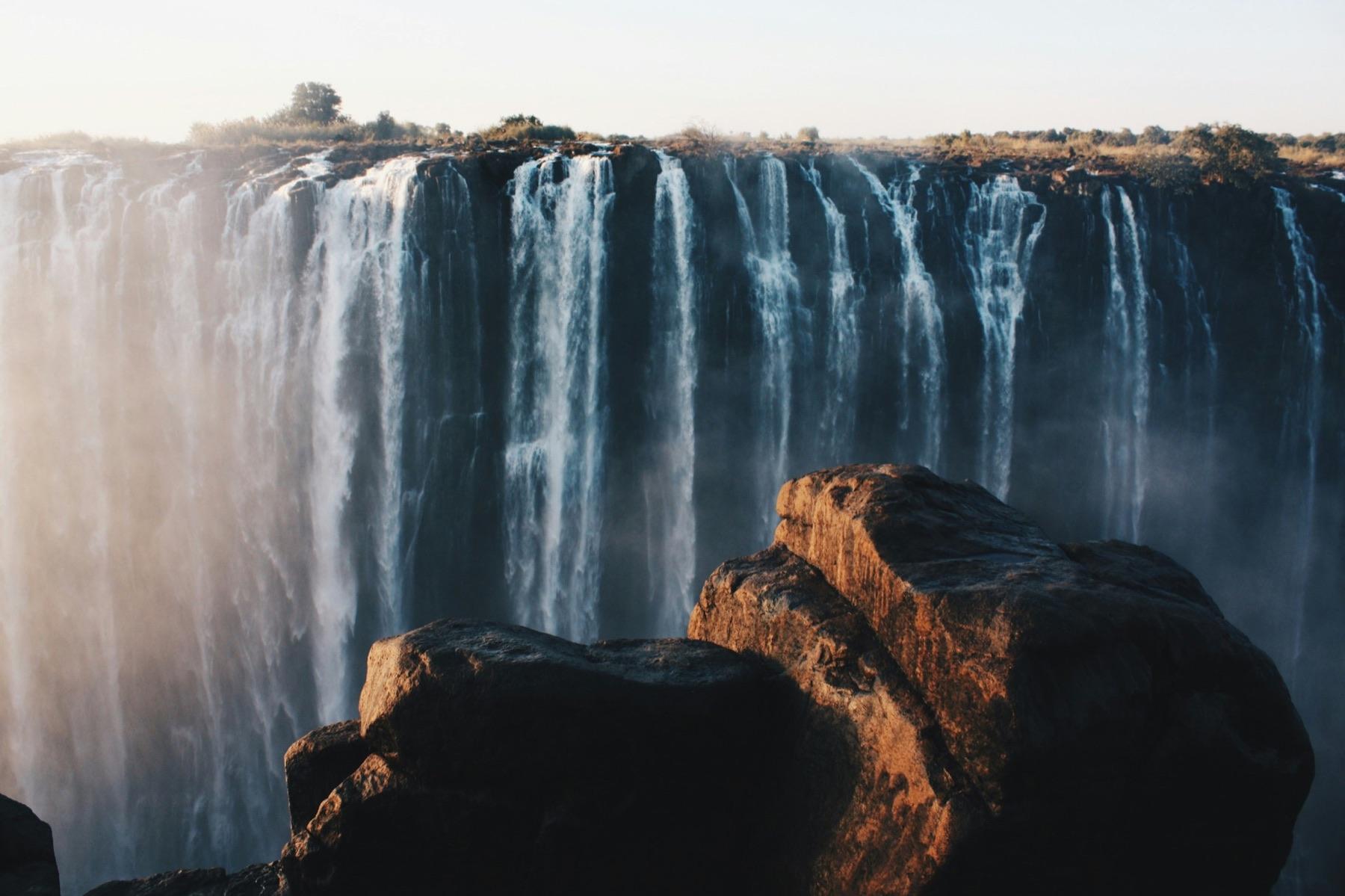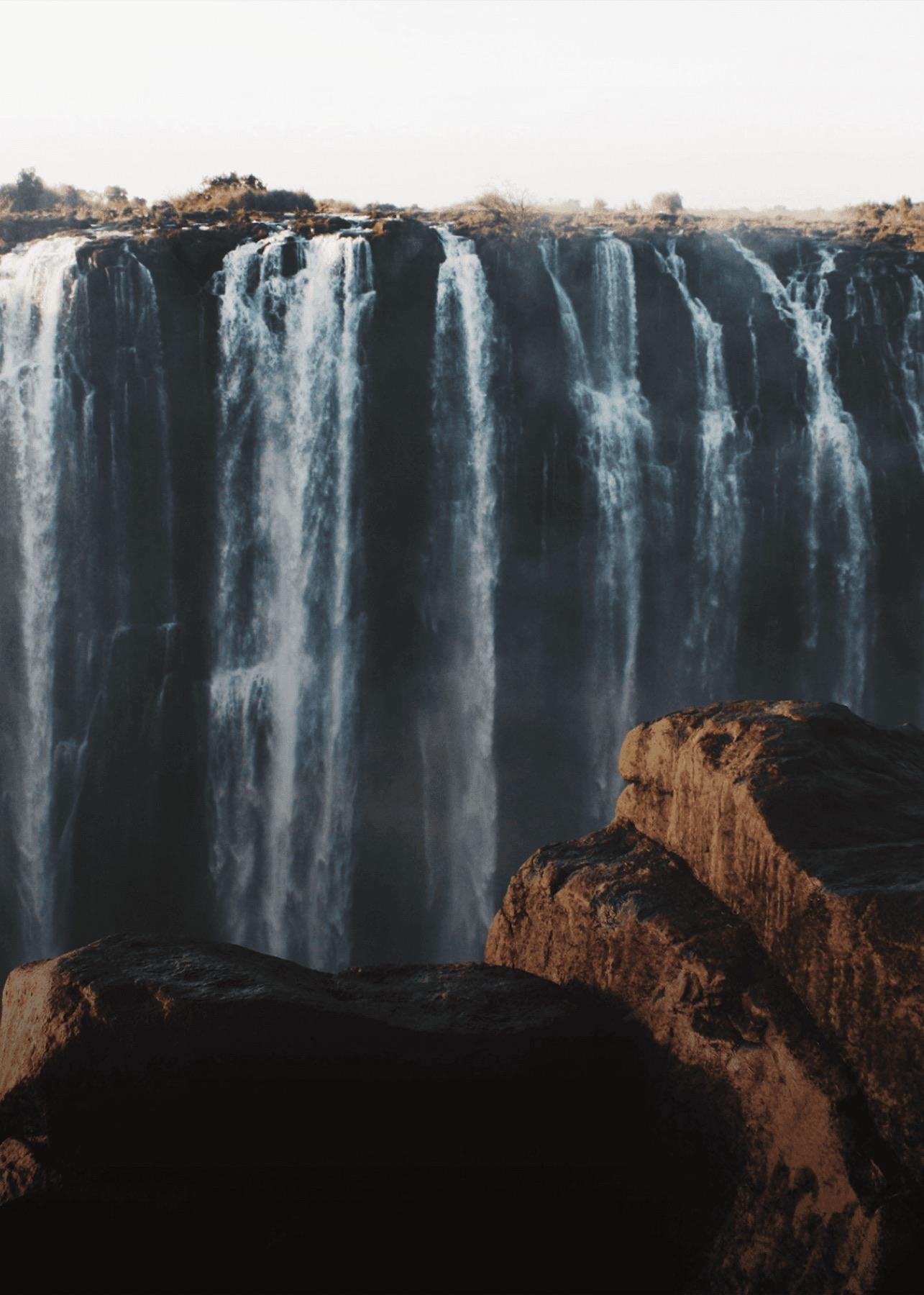
At Victoria Falls, wear quick-drying clothes and shoes that grip when wet, because how wet you get matters more than how warm it is. Daytime temperatures sit between about 25°C and 34°C all year, so the question is mostly spray. From roughly February to July the falls throw up so much water that the main viewpoints feel like standing in a heavy storm. From about August to January you will stay mostly dry on the Zambian side.
For the month-by-month weather and a full packing list, see Victoria Falls weather by month. This page is about what to put on for each part of the day.
On the falls trails
The paths on both sides are a mix of concrete, gravel, rock and wet grass. In high water some stretches, Knife-Edge Bridge on the Zambian side and the Danger Point area in Zimbabwe, are permanently drenched.
Shoes. Sports sandals with a heel strap are the most useful single item. They grip, dry quickly and don't mind puddles. Trainers work in the dry months but will be wet all day once soaked. Avoid smooth-soled flip-flops in the spray, and leave leather shoes at the lodge.
Bottoms. Quick-dry shorts or lightweight trousers. Jeans take hours to dry and become heavy and cold.
Top. A synthetic or thin cotton T-shirt. In June and July mornings, add a thin fleece you can stuff into a bag; you will take it off by 10:00.
Rain layer. Ponchos and raincoats are hired out near the entrances on both sides in high water, but a cheap poncho from home fits better and costs less. In April and May the spray is strong enough that you get wet underneath anyway, so think of the poncho as protection for your bag and phone rather than for you.
Phone and camera. A waterproof pouch or a zip bag. Our photography guide has more on keeping kit dry.
Devil's Pool and Livingstone Island
The trip to Livingstone Island runs in low water, roughly mid-August to January. You go by boat to the island, walk a short way and then wade and swim to the pool on the lip of the falls.
- Wear your swimming costume under your clothes. There is limited space to change.
- Sandals with a strap, not flip-flops. You may be asked to go barefoot for the final stretch.
- A hat and high-factor sunscreen. The rock reflects heat and there is little shade.
- Leave jewellery and anything you would hate to lose at the lodge.
White-water rafting
Rafting in the Batoka Gorge means a steep walk down, several hours on the water and a steep climb out.
- Swimwear or quick-dry shorts and a T-shirt or rash vest. Operators supply helmets and life jackets.
- Closed sandals or old trainers that tie on firmly. Flip-flops will be lost in the first rapid.
- Sunscreen and a cap for the walk out. The gorge is hot and the climb, depending on the take-out point, can take 30 minutes or more.
- Dry clothes to change into at the top.
Flights, bungee and the bridge
For helicopter and microlight flights, wear dark clothes if you want to photograph through the window or canopy, as pale tops reflect in the glass. On a microlight you sit in the open, so take a fleece even in October; it is colder at altitude than on the ground. Loose hats and sunglasses are usually taken off you before take-off. Each operator has its own rules, so ask when you book.
For bungee jumping, the bridge swing and the zipline, wear comfortable trousers or shorts and closed shoes. Skirts and dresses are a bad idea with a harness.
Boats and game drives
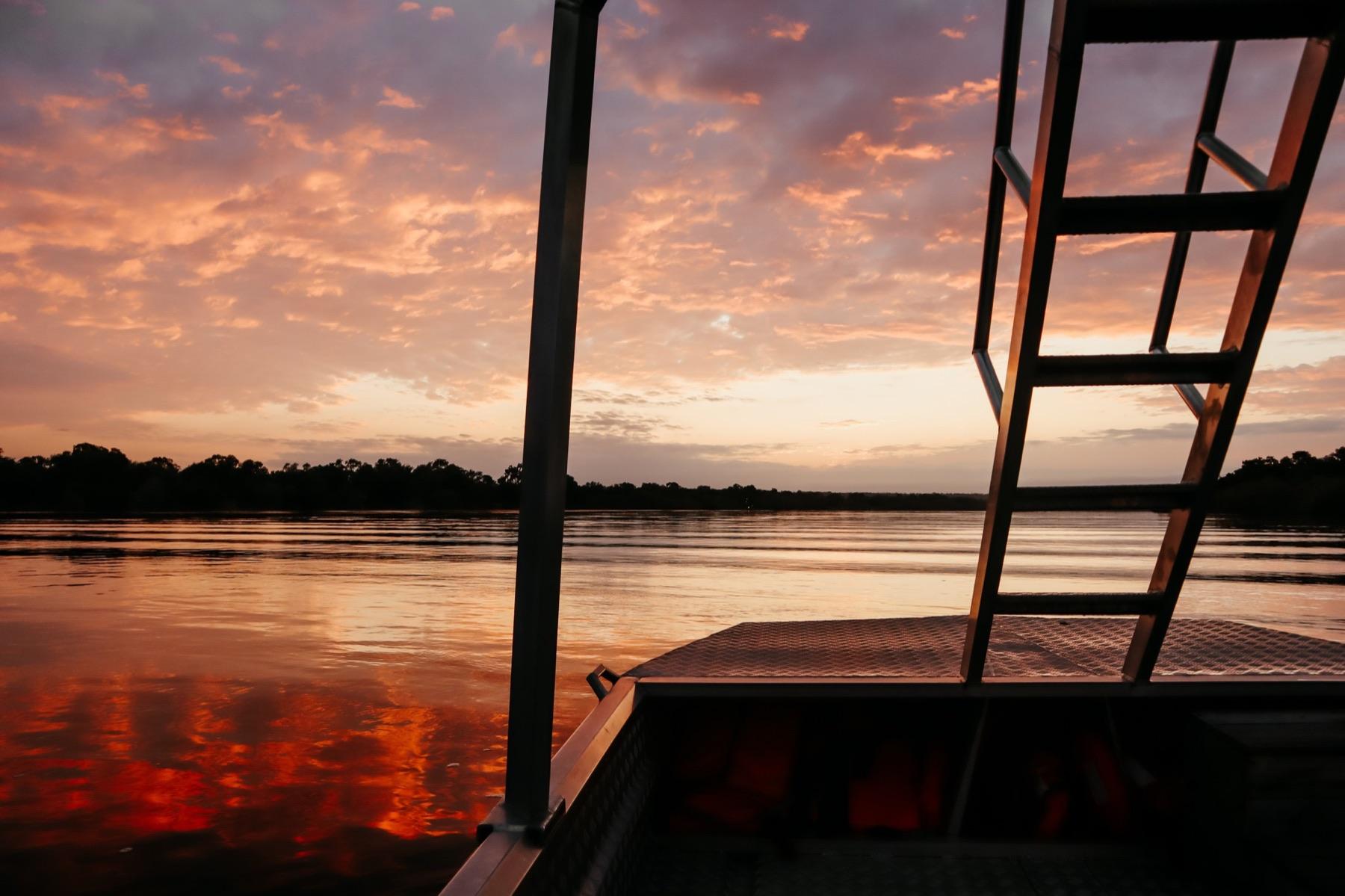
Sunrise and sunset boat trips on the upper Zambezi are calm, but the air over the water cools quickly once the sun drops. From May to August an early boat can feel close to 10°C with the wind; take a warm layer and a scarf. A light fleece is enough the rest of the year.
On game drives and walks, wear neutral colours: khaki, olive, brown, grey. Bright white shows dust and stands out to animals, and dark blue and black attract tsetse flies in some areas (less of a problem around Livingstone than in other Zambian parks). For walking with rhinos in Mosi-oa-Tunya, operators usually ask for closed shoes.
If you are staying somewhere that runs boat safaris from its own jetty, as Zambezi Dusk does twice a day, you will be on the water more than most visitors, so a proper warm layer is worth packing even in the hot months.
Around the lodge and in town
Lodges are relaxed. Shorts and sandals are fine by day; most people change into long trousers and long sleeves in the evening, partly for comfort and partly for mosquitoes. Long, light, loose clothing at dusk is one of the simpler ways to cut bites.
In Livingstone town and at the markets, Zambian norms are more conservative than at the lodges. Cover shoulders and knees, particularly if you are visiting a village, a church or a school. Swimwear belongs at the pool or on the river. Camouflage clothing is best avoided; it is associated with the military in much of the region and can attract questions at borders.
What not to bring
- Heavy denim and thick cotton hoodies.
- New shoes you haven't broken in.
- White trainers, unless you are happy to see them turn orange.
- A large umbrella. Useless in the spray and awkward on narrow paths.